Pulp & paper

Water: A challenge in the lubrication of critical paper machinery

The paper industry operates in demanding environments: wet processes, high temperatures, and equipment running at intense speeds for extended periods. In this context, lubrication is a critical pillar for maintaining machinery reliability and efficiency. However, water—a necessary component in paper manufacturing—can become one of the biggest risks to lubrication systems.

Learn about best lubrication practices in paper mills, the problems caused by lubricant contamination with water, the ways water appears in oil, and how monitoring with sensors enables critical decision-making to ensure machinery performance and longevity.
The role of lubrication in paper machines

Lubrication protects components such as bearings, gears, cylinders, and rollers from direct contact, wear, and overheating. Press and drying sections, in particular, face extreme conditions: heat, mechanical load, and constant proximity to water.

Water in the lubricant

Water can infiltrate oil through multiple paths: condensation, leaks, steam exposure, or even during the production process. There are three ways water manifests in lubricating oils:

  1. Free Water: Accumulates at the bottom of the tank. To allow the oil to separate from this water before recirculating, reservoirs must be large enough to hold the oil for at least 30 minutes (preferably 60 in critical systems). This favors natural settling.
  2. Emulsified Water: Exists as fine droplets suspended in oil, giving it a white or milky appearance. This occurs due to:
    • High speeds in piping.
    • Pumps with tight clearances generating high shear.
    • Filters with very fine pores.
    • Use of emulsifying additives.
  3. Dissolved Water: Appears when water is dissolved within the oil. Although it may seem harmless, once it exceeds the saturation point, it turns into an emulsion and loses effectiveness.

Consequences of water contamination

  • Breakdown of the lubricating film separating metal surfaces.
  • Premature failure of bearings and gears.
  • Internal corrosion.
  • Increased energy consumption.
  • Rise in unplanned maintenance.

Best practices for reliable lubrication

To mitigate these risks, it’s recommended to implement several industrial lubrication best practices:

  1. Avoid mixing incompatible additives.
  2. Ensure efficient filtration to prevent emulsions.
  3. Perform periodic maintenance based on oil analysis.
  4. Real-time monitoring of water content in oil.

The solution: Real-time moisture monitoring sensors

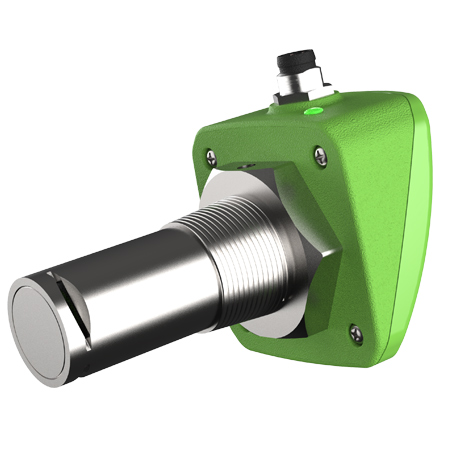
To tackle this challenge, implementing specialized sensors to detect the presence of water in lubricants is a key solution in the evolution toward predictive maintenance. At Atten2, we developed the OilHealth MAX and OilMoisture sensors to detect moisture and oil degradation using optical technology.

Advantages of Our Sensors:

  • Continuous detection of moisture levels in lubricants at critical production points.
  • Early warnings that enable action before problems escalate.
  • Informed decisions on when to change oil or make adjustments.
  • Greater operational reliability and reduced unexpected costs.
  • Easy integration with other maintenance and predictive analysis systems.

By installing sensors in critical machinery, paper mills can turn a risk into an opportunity for continuous improvement, keeping one of the most aggressive factors for lubrication—water—under control.

Conclusion

In an environment where water is omnipresent and necessary, its negative impact on lubricants cannot be ignored. Monitoring moisture content with specialized sensors enables proactive lubrication management, prevents severe failures, improves product quality, and optimizes operational resources.

By introducing our water detection sensors in critically lubricated machinery, we directly contribute to improving the efficiency, safety, and sustainability of the paper manufacturing process.

[ Knowledge ] centre

Latest related posts

[ SEE MORE ]

Only vibrations? The “blind spot” risking your critical machinery

Many predictive maintenance experts rely heavily on vibration analysis. It makes sense: it tells us…
[ SEE MORE ]

From months to seconds: How oil sensors are transforming real-time monitoring

Oil doesn’t just lubricate: it protects, cools, cleans, and, most importantly, informs. Its condition reveals…
[ SEE MORE ]

The Critical Role of Particle Counting in the Oil & Gas Industry: Why You Can’t Afford to Ignore It

In the oil & gas sector, equipment reliability is paramount, especially given the high cost…
[ SEE MORE ]

The cost of not applying an adequate maintenance strategy at a wind farm

Even though predictive maintenance has proven its ability to avoid unscheduled stoppages and faults in…